 Pipsa Martikainen
The problem
A growing user group the team didn't yet understand
The product's primary users were accountants and personnel responsible for financial management. But as companies changed how they worked, a new user group was growing — decision-makers who needed financial information directly, without going through an accountant. They had different needs, different contexts, and different pain points than the accountants the product had been built around.
The product team didn't have a clear picture of what either group actually needed. Existing feedback existed but hadn't been systematically analysed. The goal of this research was to make that picture concrete: understand what entrepreneur users found difficult, what they were missing, and what directions were worth developing.
The output wasn't a shipped feature. It was research documentation, personas, and concepts that fed directly into product development decisions — including projects that shipped in subsequent years.
My role & constraints
Co-led research against a tight timeframe
I planned and conducted the research together with a UX Designer colleague. The work was split between us throughout — interview transcription, affinity mapping, and concept documentation were all shared.
The constraint was time. The volume of data produced by eleven interviews, two workshops, and existing feedback analysis was substantial. Turning that into something usable within a tight timeframe required deliberate prioritisation at every stage. Tools: Miro.
Discovery
Designing for depth and breadth
The research was designed to cover both the depth and breadth needed to find patterns that held across different business types and user roles.
Eleven semi-structured interviews were conducted across four cities over two months. Participants came from varying lines of business — from educational providers to construction — which was deliberate. Finding common pain points across different industries was more valuable than findings that might be specific to one sector. After each interview, we asked participants to show us their office and working environment.
Seeing the context in which the product was used — the physical space, the other tools on screen, the interruptions — gave us information that questions alone wouldn't have surfaced.
In parallel, we ran two workshops with the customer service and sales teams. These teams held a different kind of knowledge: patterns they had observed across many clients over time, recurring complaints, and requests that had never made it into formal feedback. Combining that institutional knowledge with what we were hearing directly from users gave the research a broader base than interviews alone.
The research challenge
Finding patterns that held across a heterogeneous dataset
The research challenge was not finding things that were broken. The interviews surfaced those quickly. The challenge was finding the patterns that held across different user types, business sizes, and industries — and turning a large, heterogeneous dataset into findings specific enough to drive product decisions.
There was also a structural tension to manage. Stakeholders came into the project with existing development ideas they wanted the research to inform. Working with that constraint — staying true to what the research was finding while remaining useful to stakeholders with their own directions — required careful handling of how findings were framed and presented.
Process
From recruitment to grounded concepts
Phase 1: Interview planning and recruitment
Research plan developed with the UX Designer colleague. Target: at least ten semi-structured interviews. Participants were recruited across multiple cities and business types to ensure the findings would generalise. Eleven interviews were scheduled and confirmed within the research window.
Phase 2: Fieldwork
Eleven interviews conducted across four cities over two months. Semi-structured format: participants were invited to walk through the most challenging aspects of their work with the product, rather than answering fixed questions. Contextual observation was added after each interview — participants showed their office and working environment where possible. Two workshops with customer service and sales teams gathered in-house expertise to supplement the direct user data, and existing feedback from product channels was collected alongside the fieldwork to add a quantitative layer to the qualitative findings.
Phase 3: Synthesis
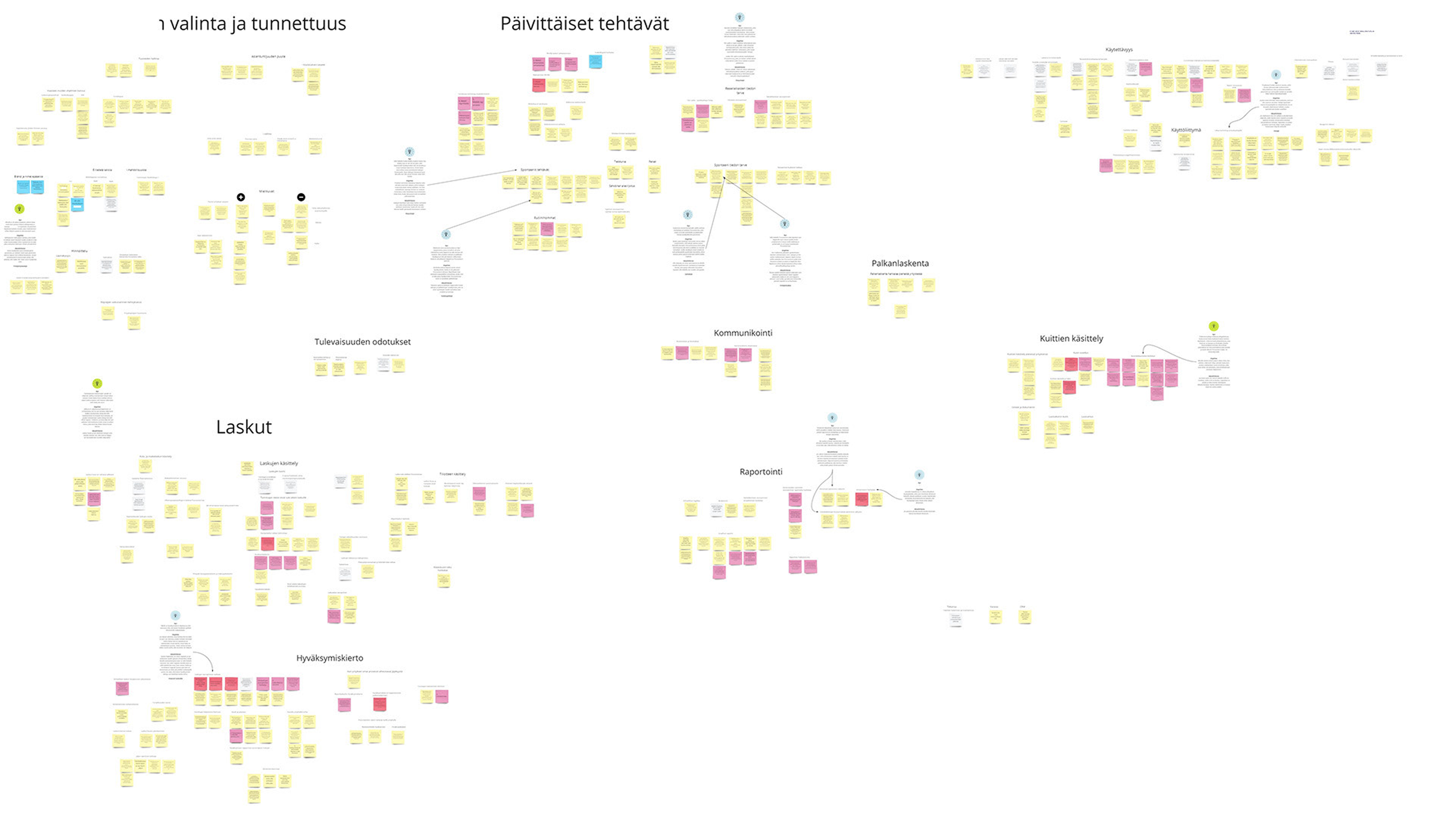
The volume of data — eleven interview recordings, two workshops, and existing feedback — required a systematic synthesis approach. My colleague and I divided the recordings between us and transcribed them before beginning analysis. Starting affinity mapping as early as possible was a deliberate choice to make the most of the limited timeframe. Affinity mapping was done in Miro, which let us create insights as we grouped notes rather than mapping first and analysing separately — saving time and keeping the connections between raw data and conclusions visible throughout.
Phase 4: Persona development
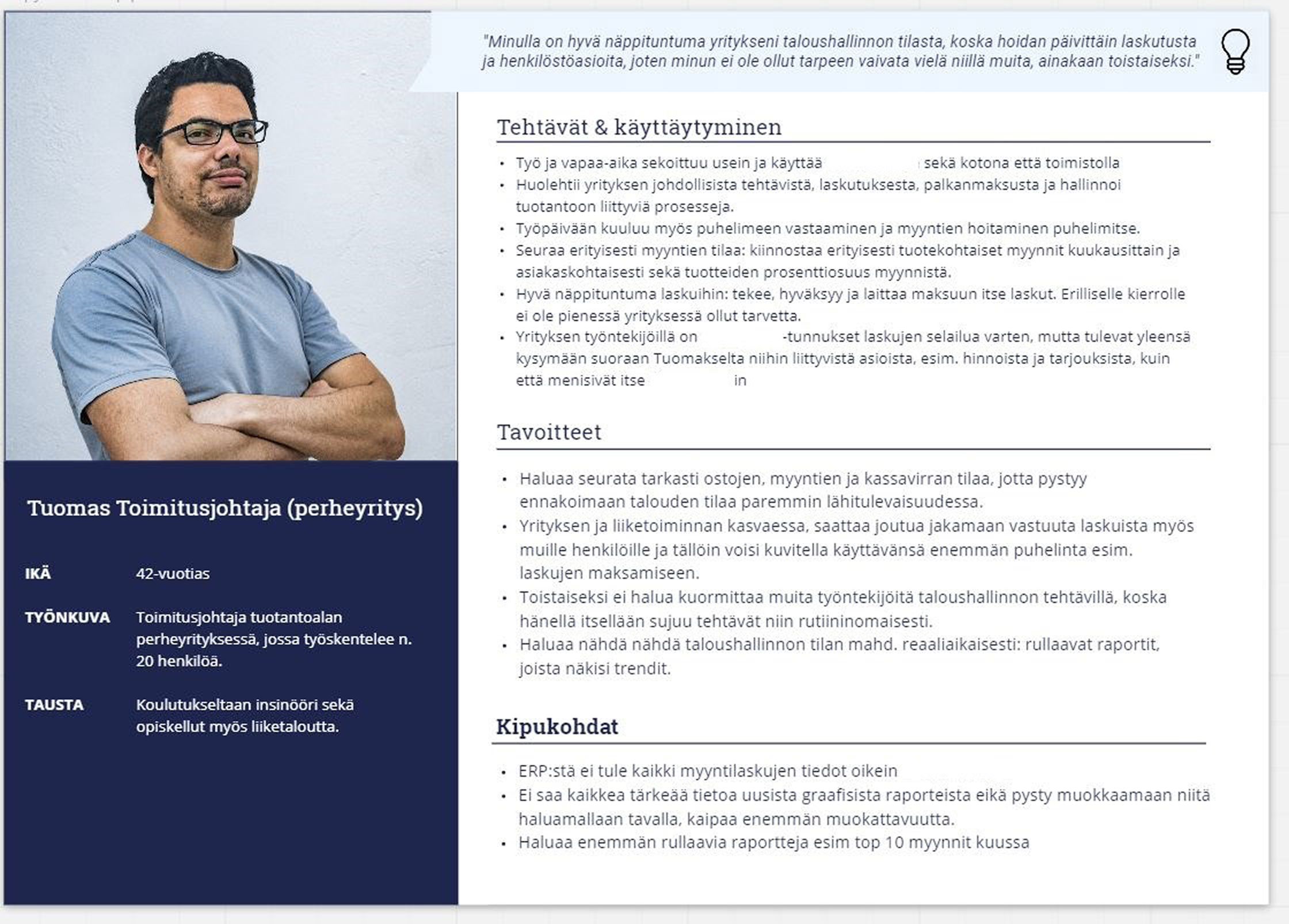
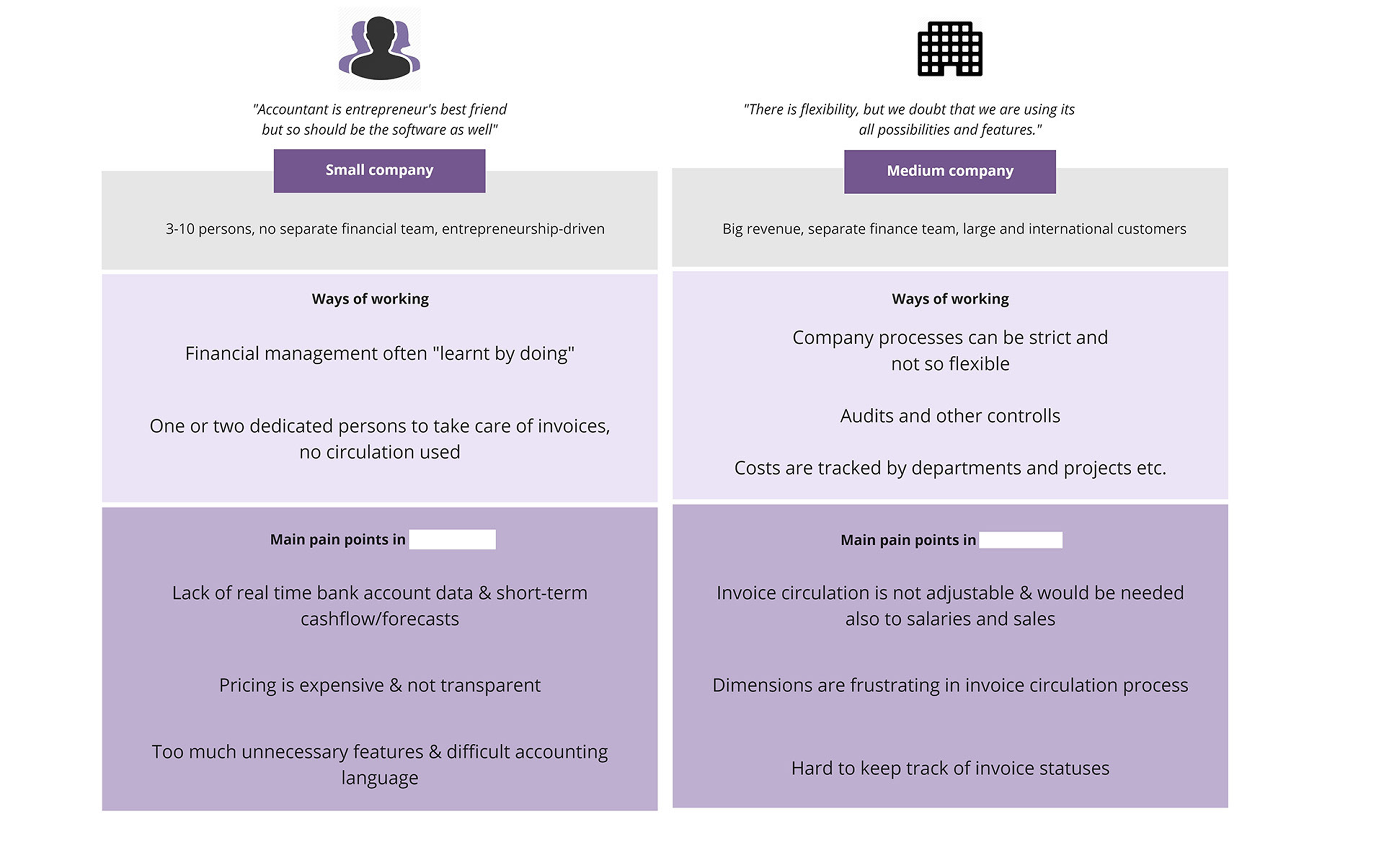
Four personas were developed from the synthesis: a start-up entrepreneur, a Controller, a CEO of a family business, and a small business entrepreneur. Each captured background, ways of working, pain points, and needs specific to their context. The personas represented the two main user groups that had emerged from the research — accountants and the decision-maker group with different needs — and the variation within those groups.
Phase 5: Concept ideation
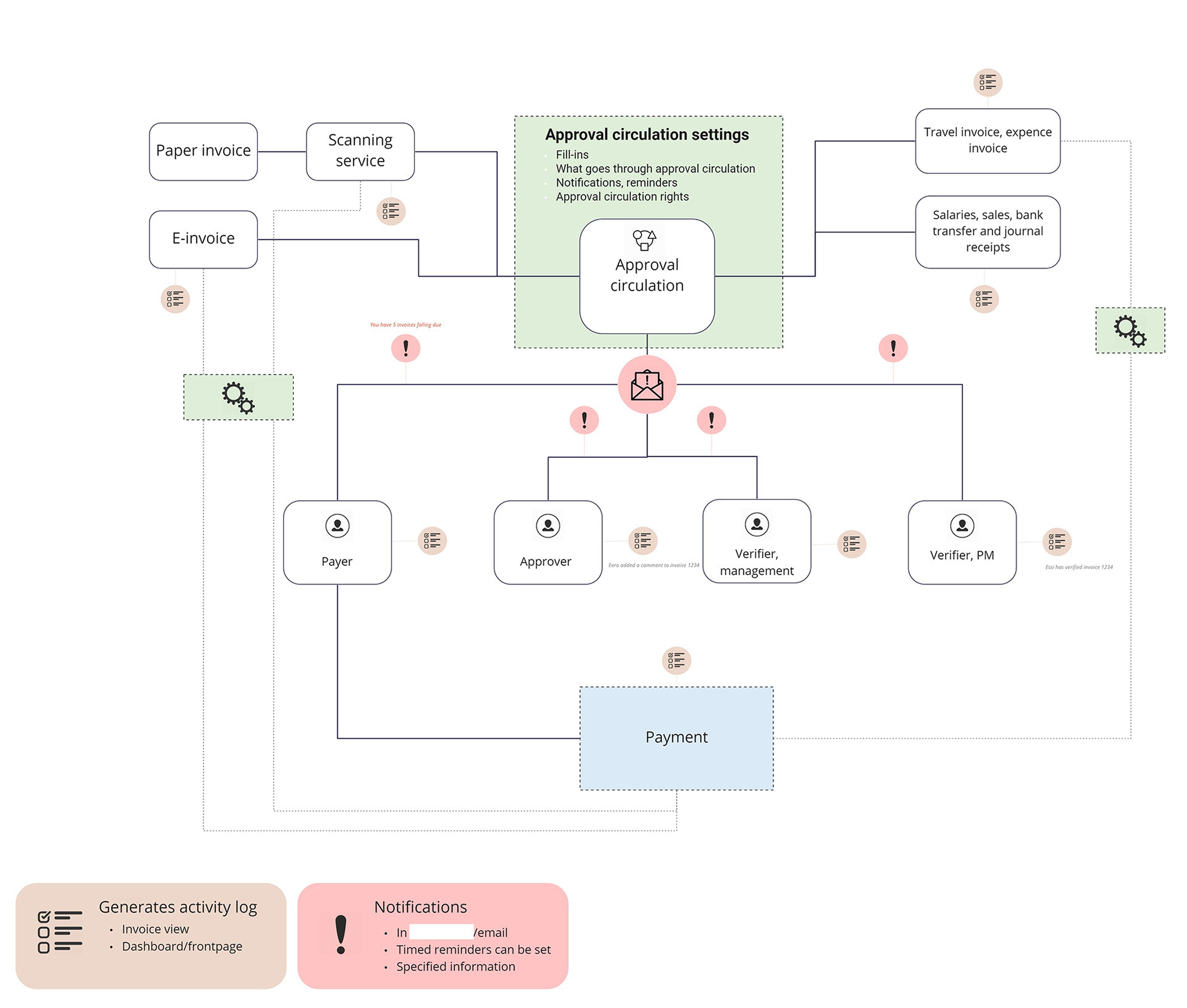
Initial concepts were developed for the key issues identified in the research, grounded in the affinity mapping insights and checked against each other to confirm they were addressing real patterns rather than edge cases. One example: the research identified the invoice approval circulation process as unnecessarily complex — the approval flow required multiple people to act in sequence, with limited flexibility. The concept developed in response proposed configurable settings for approval circulation, allowing the process to match how different companies actually structured their approval chains rather than requiring them to adapt to a fixed flow. Concepts were documented and passed to development teams for further research and prioritisation.
Key research decisions
The methodological choices that shaped the study
Semi-structured interviews with contextual observation
Structured interviews would have been faster to run and easier to analyse. Semi-structured interviews gave participants room to surface issues the research hadn't anticipated — which is where the most useful findings came from. The contextual element — seeing the working environment — added a layer that questionnaires and screen-based research couldn't produce: understanding what the product was competing with for attention and how it fit into a real working day.
Cross-industry participant selection
Recruiting across four cities and multiple business sectors was a deliberate decision to test whether pain points were universal or industry-specific. Finding common issues across educational providers, construction companies, and others meant those findings carried more weight when presented to stakeholders — they weren't artefacts of one sector's particular workflow.
Customer service and sales workshops alongside user interviews
User interviews capture what users experience. Customer service and sales teams capture patterns across many users over time — complaints that users mention once in an interview but describe repeatedly to support, or requests that come up constantly but never make it into formal feedback channels. Combining both sources gave the research more breadth than user interviews alone, and gave it relevance to stakeholders already hearing from those internal teams.
Affinity mapping with simultaneous insight creation
Standard affinity mapping produces a map first and extracts insights second. Running insight creation in parallel with grouping — using Miro to annotate as we went — compressed the synthesis timeline without losing analytical rigour. Given the data volume and timeframe, that approach was necessary. It also kept the connection between raw data and conclusions visible, which made the research easier to interrogate during stakeholder presentations.
Artifacts produced
What was delivered
- Research plan and interview guide.
- Eleven interview recordings and transcripts.
- Customer service and sales workshop outputs.
- Affinity map with insights (Miro).
- Four user personas: start-up entrepreneur, Controller, CEO of family business, small business entrepreneur.
- Two-group analysis: ways of working and pain points for accountants and decision-maker users.
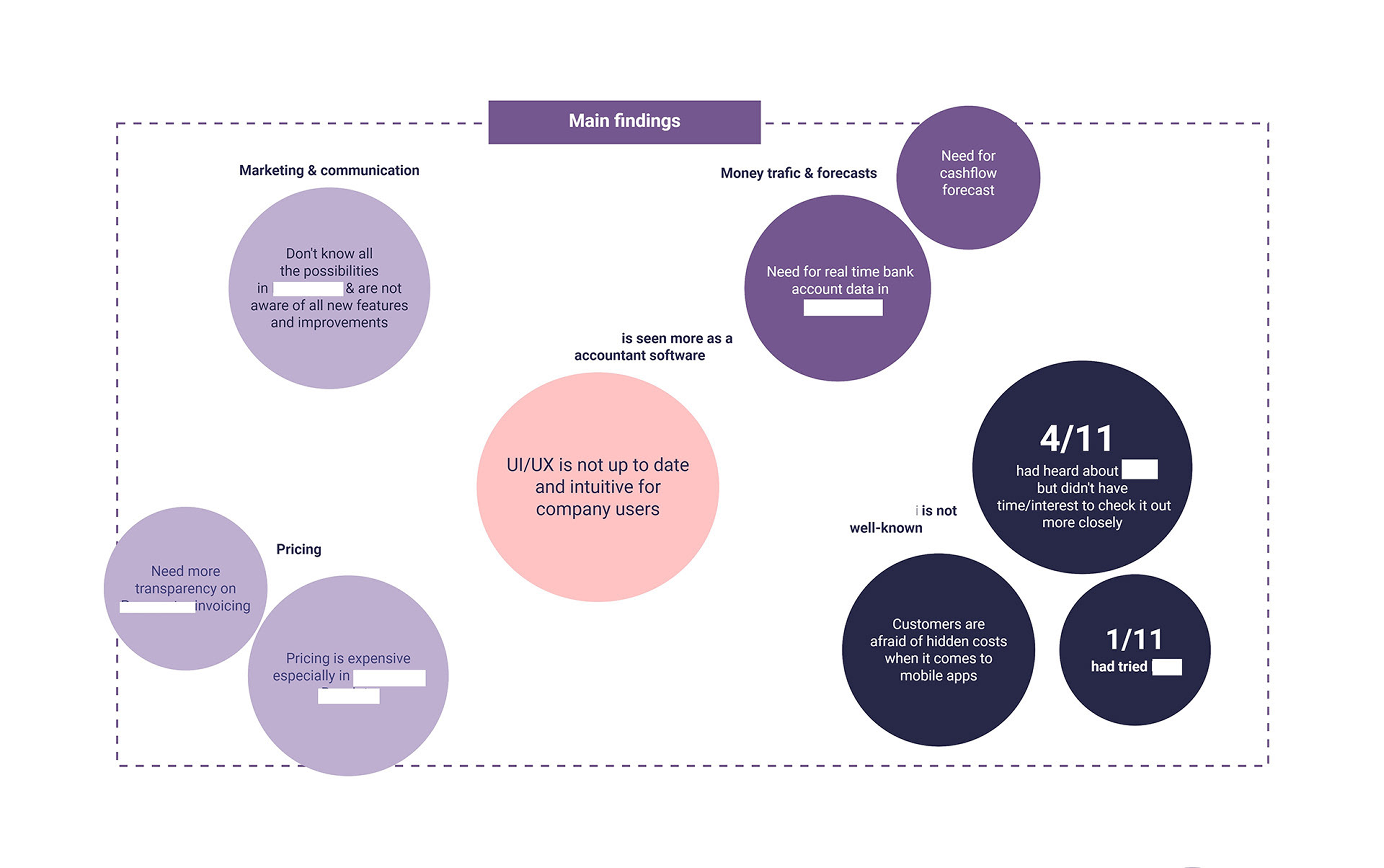
- Abstract of main findings.
- Concept documentation, including the invoice approval circulation concept.
- Research presentation delivered to stakeholders and development teams.
Outcomes
An evidence base that outlasted the study
The research produced a documented picture of entrepreneur user needs that the product team hadn't had before. Findings were presented to stakeholders and development teams on multiple occasions, and the documentation remained in active use in product development beyond the immediate research period.
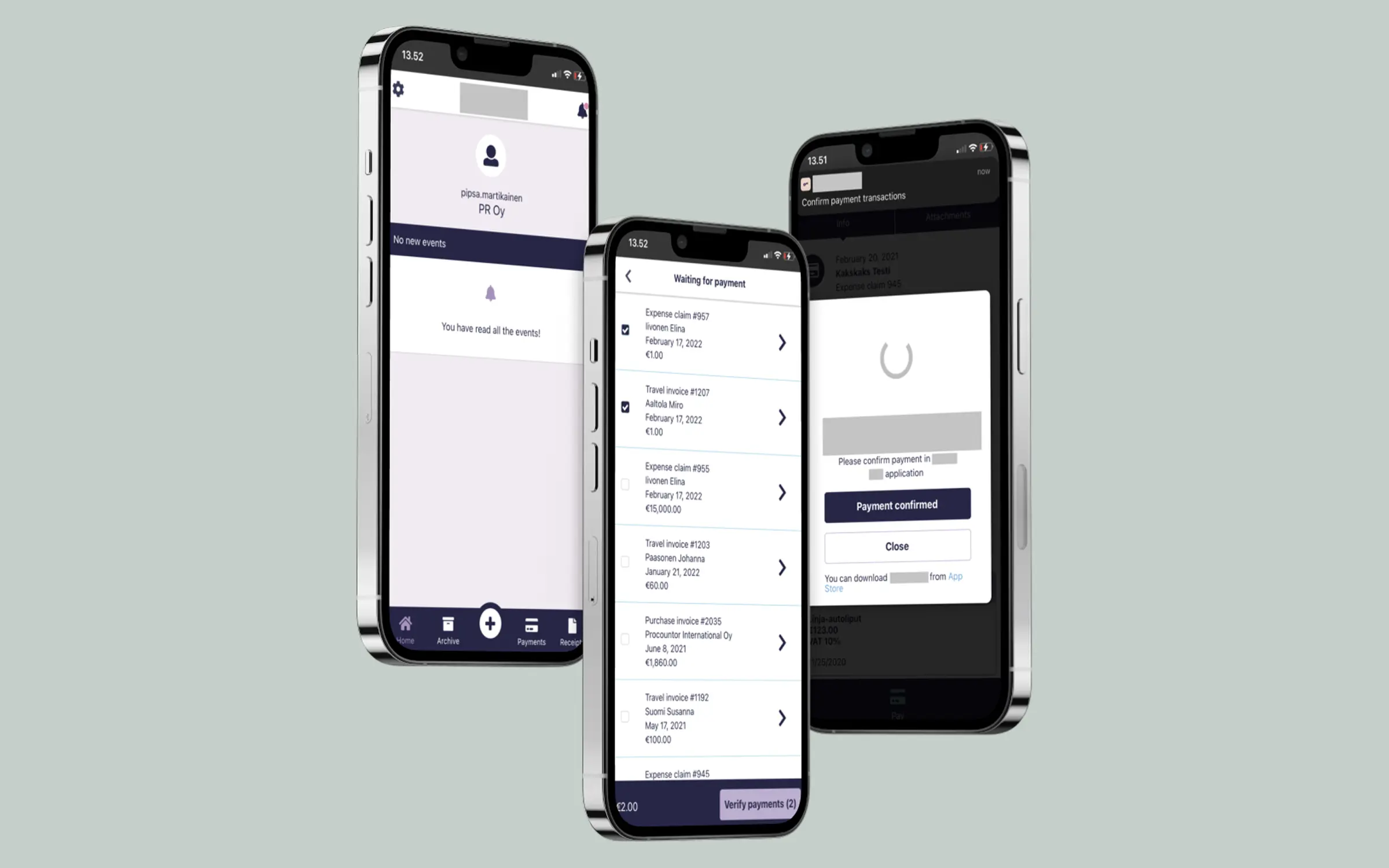
The direct value of this research was what it made possible afterwards. The persona work, pain point analysis, and concept directions fed into product decisions in subsequent years — including the receipt management feature developed in 2020 and the mobile invoice payment feature in 2021.
Research of this kind doesn't produce a shipped feature. Its output is the evidence base that makes subsequent decisions better grounded.
What I would do differently
Where I would change the approach
More time between fieldwork and synthesis. The synthesis phase was compressed by the timeframe, and the volume of data from eleven interviews and two workshops was large. More time between the end of fieldwork and the start of affinity mapping — even a few days — would have allowed better perspective before analysis began. Synthesising data too close to collecting it risks carrying assumptions from the fieldwork into the analysis.
Clearer upfront alignment on how findings would be weighted against existing stakeholder directions. Stakeholders came into the project with development ideas they wanted the research to inform. The tension between staying true to research findings and accommodating those directions was manageable but took effort to navigate throughout. Establishing earlier what would happen if research contradicted existing directions would have made the presentation phase cleaner.
Follow-up with participants after concepts were developed. The concepts were developed from the research findings and sent to development teams, but participants weren't shown them. Closing the loop — presenting the concepts back to a subset of interview participants for a reaction — would have added a validation step between research and development that the process didn't include.
Reflection
The case for a project furthest from a shipped outcome
This is the earliest project in my portfolio and the one where the work is furthest from a shipped outcome. That makes it easy to undervalue. The honest case for including it is what it produced downstream. Eleven interviews across four cities, two internal workshops, affinity mapping of a substantial dataset, four personas, and a set of concepts grounded in real user needs — in 2018, that kind of research foundation was not routine for this product team. The documentation was still being used in product development two years later.
The methodological choice I'm most confident about in retrospect is the cross-industry recruitment. Findings that hold across construction, education, and other sectors are more durable than findings from a single vertical. Those findings also proved easier to defend to stakeholders with different priorities — because the evidence base was broader than any one client's context.